



One Coffee a Day? Call the Workplace Police
The sacred office bean
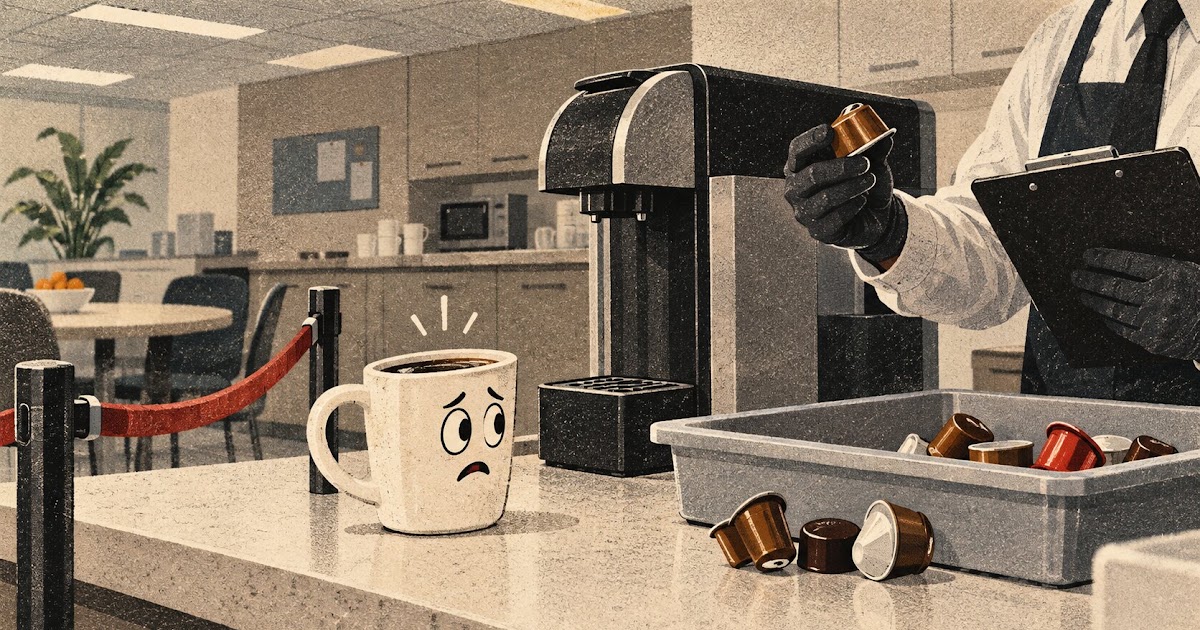
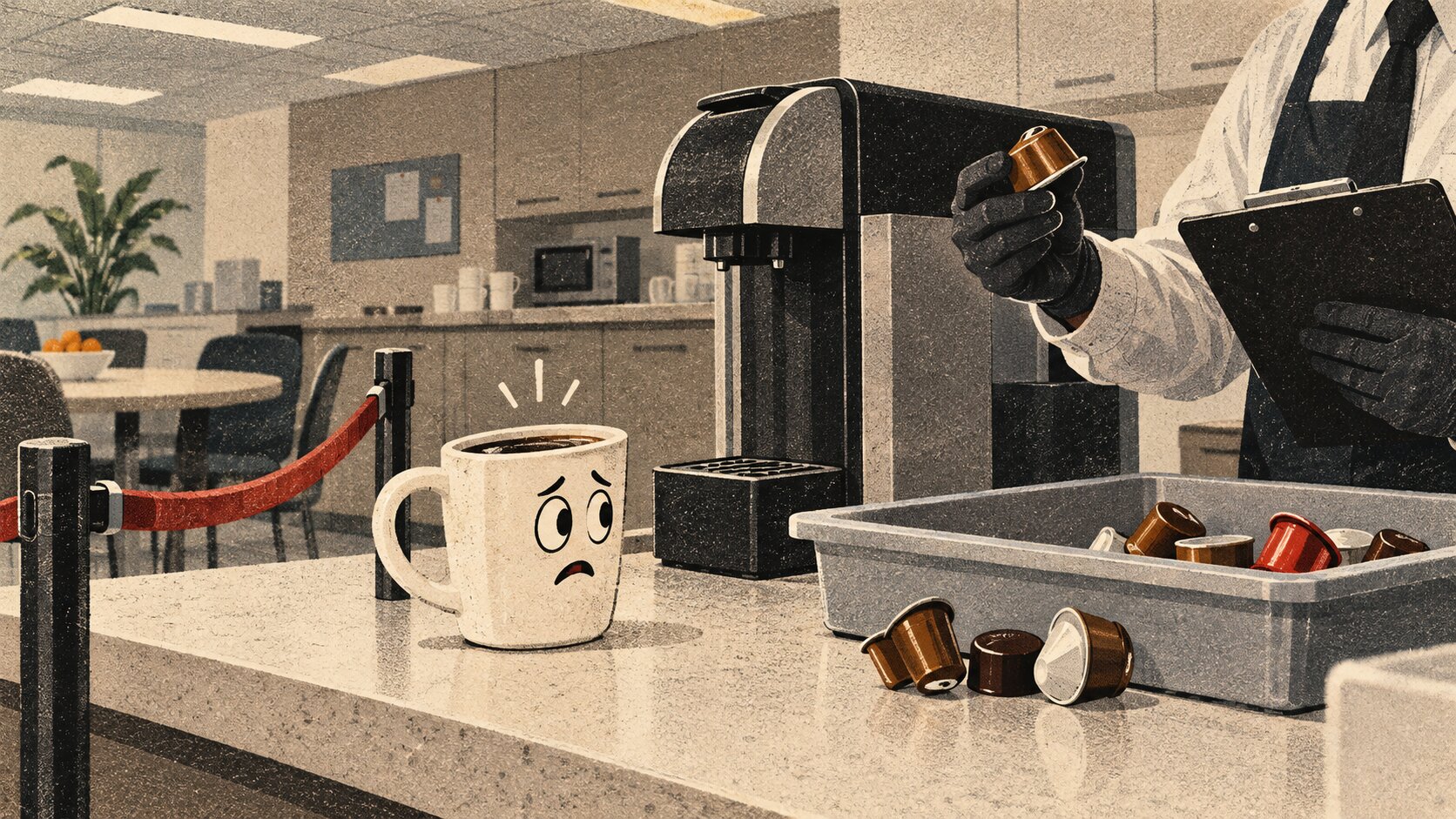
A new employee reportedly got pulled aside for making one coffee each morning with company-provided supplies. One. Not seven. Not a suspicious backpack full of pods. One small daily act of survival in the fluorescent theatre of corporate life.
As a committed seven-cup-a-day drinker, I must speak for my people. We are not asking for a bean throne, a dedicated barista, or a workplace espresso constitution, although I would read one. We are asking that adults at work not be treated like they have committed procurement fraud because they used the office coffee machine as intended. If one daily coffee is a culture problem, the coffee is not the culture problem.
Quick take
- The claim: Reprimanding a new employee over one daily coffee is a management signal, not a caffeine policy.
- What people get wrong: The argument gets framed as “free coffee abuse” when the real issue is trust.
- Why it matters: Tiny workplace controls often reveal how a company treats people when the stakes are low.
- Who will care: New hires, office workers, managers, and anyone who has ever paid A$6 for a takeaway coffee because the break room vibe felt cursed.
- Bottom line: If the company cannot absorb one coffee a day, it should stop offering coffee, not stage a moral inquiry.
This was never about coffee
The story, reported from a Reddit post and covered by workplace media in September 2026, is beautifully absurd in the way modern office culture often is. The employee said they used one K-cup and creamer each morning, brought their own milk and sugar, and was told by a floor manager that daily coffee was “not typical”.
That phrase deserves to be placed in a museum beside other corporate classics like “we’re a family” and “quick sync”. Not typical according to whom? The International Council of Morning Behaviour? The Australian Bureau of Acceptable Beverage Frequency? A laminated spreadsheet titled “Morale, But Cheap”?
The myth
- Office coffee is a generous perk, not a normal workplace courtesy.
- If one person drinks coffee daily, supplies will collapse by Friday.
- New employees should prove humility by appearing only mildly alive.
- A manager noticing tiny consumables is the same thing as operational discipline.
The reality
Coffee is not free in a cosmic sense. Someone pays for it. But workplaces choose to provide it because it smooths the day, keeps people on site, and signals that basic comfort is not a suspicious activity. In many offices, coffee is less a luxury than a peace treaty between human biology and the calendar invite system.
There is a sensible version of a coffee policy. If staff are emptying the kitchen into tote bags, make a rule. If costs are getting silly, buy cheaper coffee, set a monthly budget, or stop pretending the supply is communal. But singling out a new hire for one cup a day is not fiscal stewardship. It is what happens when management discovers a microscope and points it at the wrong thing.
Safe Work Australia lists poor support, low job control, poor organisational justice, and poor workplace relationships among psychosocial hazards that can affect mental health at work. That does not mean every coffee complaint is a formal workplace hazard. It does mean small signals matter, especially when a new employee is learning whether the place is fair, safe, and sane.
A small office scene
Imagine starting a new job in Sydney, Melbourne, Brisbane, Perth, or any office with carpet tiles and a fridge nobody wants to clean. You arrive on time. You do your work. You make one coffee. Then someone with a title you barely understand tells you that your morning beverage pattern has been noticed.
That is not onboarding. That is a warning flare.
The cost of a pod and creamer is tiny compared with the trust lost when a new worker thinks, “If this is a problem, what happens when I make an actual mistake?” That is the part no procurement spreadsheet captures.
The seven-cup constitutional position
Now, as a seven-cup-a-day drinker, I must clarify my position before the moderation committee arrives with a clipboard. I am not recommending seven cups as health advice. I am simply confessing that if my workplace told me to drink less coffee, I would update my resume before I updated my mug.
Caffeine affects people differently. Health sources commonly note that around 400 mg of caffeine a day is a general upper amount many healthy adults tolerate, while some people should limit it more, including pregnant people and those with certain medical conditions. A cup of coffee can vary widely in caffeine content, so seven cups may be either “a big day” or “please check on your colleague”, depending on size and strength.
But that is exactly why the workplace angle is so funny. The employee in the story was not running a personal cold brew refinery behind the printer. They were drinking one cup. One. The kind of consumption that should barely register unless the office coffee budget is being managed by a haunted calculator.
Where the simple take fails
- It is not about entitlement: Workers are not automatically entitled to unlimited supplies, but if something is offered as communal, daily normal use should not be treated as deviance.
- It is not about health: A manager policing one cup of coffee is not practicing public health. They are policing behaviour.
- It is not about savings: If one coffee per worker breaks the budget, the company has a budgeting problem, not a beverage emergency.
What not to do
Do not create vague perks and then shame people for using them normally. That is the office equivalent of putting out biscuits and then asking who keeps eating the biscuits. Either offer the perk clearly, limit it clearly, or remove it clearly. Mystery generosity is how resentment gets brewed.
The real management smell test
The coffee itself is a decoy. The real question is whether a workplace handles tiny issues with proportion. A good manager sees one daily coffee and thinks, “Excellent, a human has begun the day.” A strange manager sees one daily coffee and hears the national anthem of waste.
This is the smell test: if the conversation makes the employee feel less welcome over something trivial, the manager has spent social trust to recover pocket change. That is bad maths.
For new hires especially, early interactions carry extra weight. People are still decoding the unwritten rules. They are watching who gets corrected, what gets noticed, and whether policies are real or invented in the moment. A workplace can recover from weak coffee. It has a harder time recovering from making adults feel rationed before they have finished probation.
If you are the employee in a situation like this, the practical move is boring but useful. Ask for the policy in writing, stay polite, and avoid turning the first month into a courtroom drama unless the pattern continues. Bring your own coffee if you must, but also pay attention to what the moment is telling you.
If you are the manager, the fix is simpler: stop making the coffee machine a loyalty test. If supplies are genuinely being overused, communicate a clear rule to everyone. If not, leave the new person alone and find a bigger problem to solve.
Quick reality-check list
- Is the coffee offered as a shared workplace supply?
- Is the employee using a normal amount, or obviously taking supplies home?
- Is there a written policy, or is someone inventing etiquette after the fact?
- Would the cost of correcting this exceed the cost of the coffee?
- Will the employee feel more supported after this conversation, or merely watched?
Final sip
One cup of office coffee should not become a corporate character trial. It is a small ritual, a cheap comfort, and in many workplaces, the only thing standing between “productive morning” and “staring at the inbox like it owes you money”.
I say this as a seven-cup loyalist with no intention of moderating my personality into herbal tea: if a workplace cannot handle one daily coffee, it should be honest and remove the machine. But do not offer the bean, then punish the believer.
By: Site Publisher
Disclosure: No paid placement influenced this post.
References