
How to Start a Simple Newsletter for Your Online Store
Why a simple newsletter is enough to start
A lot of small store owners wait too long to start a newsletter because they imagine it has to look polished, strategic, and packed with content. They picture a full editorial calendar, custom graphics, and a big list of email ideas ready to go. That is usually what slows them down.
For most small online stores, the best first newsletter is much simpler. It is one clear email sent on purpose. It reminds people your store exists, gives them something useful or interesting to look at, and helps them take one easy next step.
That matters because email is one of the few channels you can build without depending completely on algorithms or paid traffic. A simple newsletter helps you stay in touch with people who already showed some interest. It also gives your brand a steady way to build familiarity and trust over time.
You do not need to become a media company. You need a repeatable email that feels helpful, easy to scan, and realistic for you to keep sending.
What your store newsletter should actually do
A store newsletter does not need to entertain everyone. It needs to give subscribers a reason to keep opening your emails.
For a small online store, that usually means doing three things well:
- reminding people what your store sells
- giving a useful or interesting reason to click
- keeping the brand familiar without flooding inboxes
That is enough for a strong start.
A lot of newsletters go wrong because they try to do too much. One email turns into a store update, a founder note, a product roundup, a discount push, a blog post, and a customer story all at once. The result feels crowded.
A simpler approach works better. Pick one main point for each email. Maybe it is a new arrival. Maybe it is a best-seller roundup. Maybe it is a short guide tied to what you sell. Maybe it is a seasonal reminder. When the email has one clear job, the writing gets easier and the message lands better.
This also makes your store feel more consistent. A subscriber starts learning what kind of emails to expect from you, and that predictability helps.
What to send in a simple store newsletter
The easiest way to start a newsletter is to stop asking, “What should I say forever?” and start asking, “What could I send this week or this month that would actually help or interest a customer?”
That question leads to better emails.
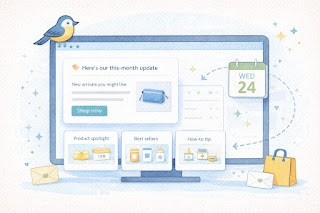
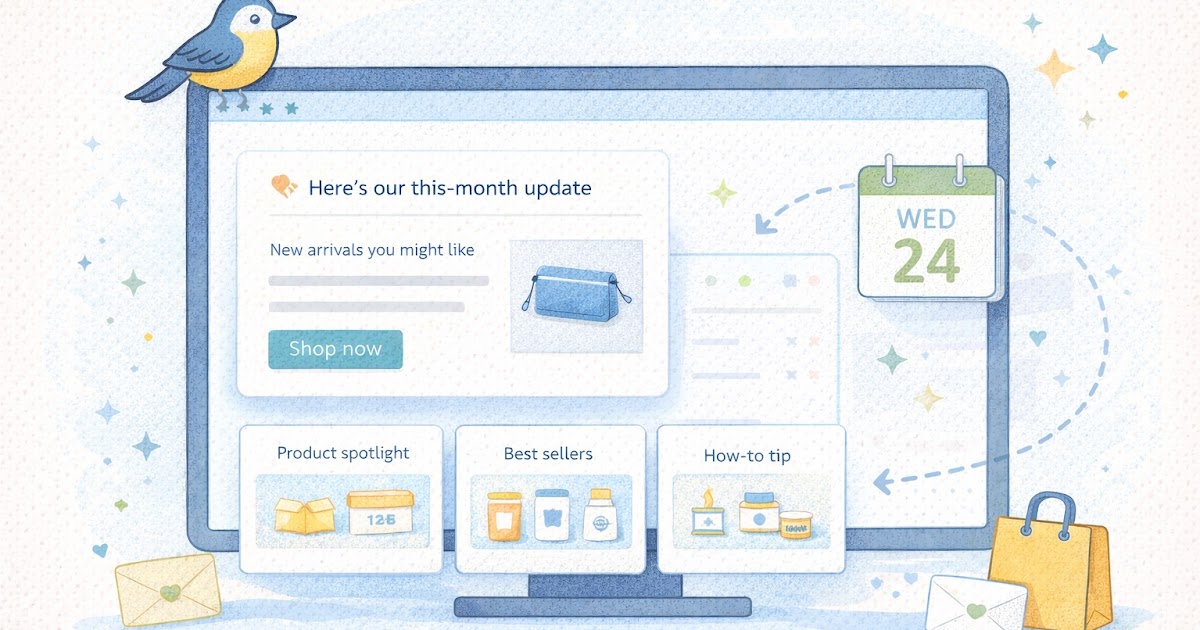
Here are a few beginner-friendly newsletter angles that work well for small stores:
1) A product spotlight
This is one of the easiest newsletters to write. Pick one product, explain why people like it, who it is for, or how to use it, and give readers a simple path to view it.
This works especially well when the product needs a little explanation. A travel pouch, skin balm, candle size, planner insert, or kitchen tool can all benefit from a short email that makes the product easier to understand.
2) A small best-sellers roundup
A “start here” style newsletter can help new subscribers or quieter readers who do not know what to browse first.
This kind of email might include:
- 3 to 5 customer favorites
- one short line on why each is useful
- one clear browse button at the end
It works because it lowers decision friction.
3) A restock or new-arrival update
This is one of the most natural newsletter types for ecommerce. If something people wanted is back, or if you have a few new items worth seeing, that is a real reason to send an email.
The key is to keep it focused. A few items are usually enough. You do not need to cram the whole catalog into one send.
4) A simple how-to or use-case email
A newsletter can also help customers use, choose, or care for what you sell.
For example:
- a candle shop could send a short note on scent strength or burn care
- a skincare store could explain how to choose between two product types
- a travel-goods brand could show what fits inside one pouch or organizer
This kind of email builds trust because it helps without sounding like a hard sell.
5) A seasonal or timely nudge
You do not need to chase every holiday, but simple seasonal angles can work. A gift roundup, a travel prep email, a desk reset theme, or a warm-weather routine email can give your newsletter some natural relevance without feeling forced.
How often to send without becoming annoying
One reason founders avoid newsletters is the fear of becoming “that brand” in someone’s inbox. The good news is that most small stores do not need to send very often to stay visible.
For many early-stage stores, a simple rhythm like twice a month or once a week is enough. The right pace depends on how much you actually have to say and how often your inventory or product story changes.
A good rule is this: send as often as you can stay useful and consistent.
If you can only send two good emails a month right now, start there. That is better than sending three emails one week and disappearing for two months. A steady rhythm builds more trust than bursts of activity followed by silence.
Practical steps
- Pick one realistic send schedule.
- Choose 3 to 4 newsletter angles you can rotate.
- Give each email one clear topic.
- Keep the layout simple and easy to scan.
- End with one main call to action.
This keeps the process manageable.
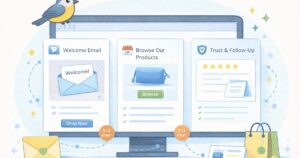
It also helps to think in terms of repeatable blocks. A simple subject line, short intro, product or idea section, and one button can carry a lot of your newsletters without forcing you to reinvent the format every time.
Common newsletter mistakes to avoid
One common mistake is writing the newsletter like a store announcement board. If every email says some version of “we have products, please buy them,” people tune out fast.
Another issue is sending emails with no clear point. A newsletter should not feel like random leftovers from the week. Even a simple email needs one reason to exist.
A third mistake is trying to sound too polished or too branded. For a small store, clarity and usefulness usually do more work than flashy copy.
Common mistakes
- sending only when you are desperate for sales
- putting too many topics into one email
- writing vague subject lines
- making every email about discounts
- using a layout that feels cluttered on mobile
- having no clear next click for the reader
There is also the problem of copying bigger brands too closely. A large retailer may send dense promotional emails every other day because it has the volume and brand recognition to do that. A smaller store often does better with calmer, more focused emails that feel more personal.
A simple example: a weak newsletter might say, “New season, fresh vibes, and exciting things ahead.” That sounds nice but says very little. A stronger version might say, “Three giftable desk items that keep small workspaces less cluttered.” That gives the reader a reason to care right away.
A quick newsletter checklist summary
Quick checklist
- [ ] The newsletter has one clear topic per send
- [ ] The subject line says something real, not just hype
- [ ] The email reminds readers what the store sells
- [ ] The layout is easy to scan on mobile
- [ ] The call to action is simple and visible
- [ ] The tone feels helpful, not pushy
- [ ] The store has a realistic send schedule
- [ ] The email gives a reason to click now or later
- [ ] The content feels relevant to actual customers
- [ ] The format is simple enough to repeat
If several of these basics are missing, the newsletter may still go out, but it is probably harder to maintain and easier for readers to ignore.
Start small, then keep it consistent
A simple newsletter is enough to start building the habit. That is the real win in the beginning.
For a small online store, the best first move is not building the perfect email strategy. It is choosing a manageable format you can actually keep sending. One useful topic, one clear message, one easy next step. That is plenty.
Over time, you can learn what gets opened, what gets clicked, and what kinds of emails feel most natural for your store. But that learning only starts once you begin.
Gentle next step
Pick one newsletter topic you could send this week without overthinking it. A product spotlight, a best-seller roundup, or a restock note is enough. Write it in plain language, keep it easy to scan, and send it on a schedule you can realistically maintain. Sin estrés. A simple newsletter you actually send beats a perfect one that stays in drafts.
FAQs
Q1. How often should a small online store send a newsletter?
A1. For many small stores, once a week or twice a month is enough to start. The key is to choose a rhythm you can actually maintain.
Q2. What should a first newsletter be about?
A2. A product spotlight, best-seller roundup, restock update, or short how-to tied to your products are all good starting points.
Q3. Does every newsletter need a discount?
A3. No. Many newsletters work better when they offer clarity, browsing help, or useful product context instead of always leading with a promo.
Q4. What makes a newsletter feel too salesy?
A4. Usually it is the combination of vague hype, too many pushes to buy, and no useful reason for the email to exist beyond “shop now.”
Trending Now